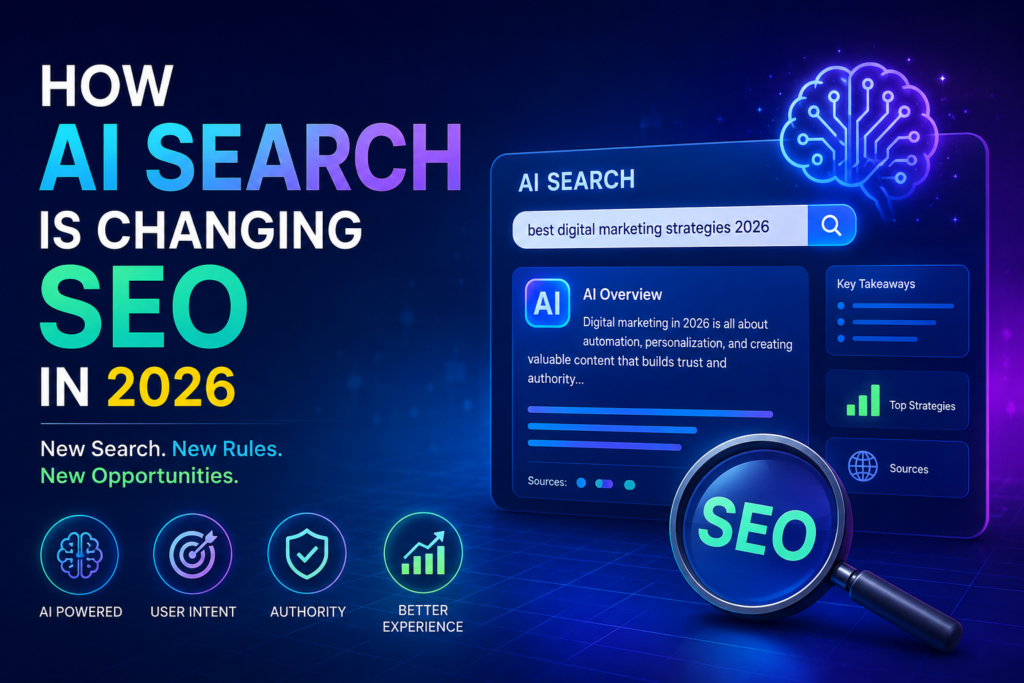
SEO is going through one of the biggest transformations in its history.
For years, ranking on the first page of Google was the ultimate goal for businesses, bloggers, and marketers. But in 2026, things look very different. AI-powered search engines are changing how people discover information, and traditional SEO strategies alone are no longer enough.
The rise of AI search means businesses need to rethink how they create content, build authority, and connect with users online.
The Shift from Search Results to AI Answers
In the past, users searched for information and clicked on a list of websites.
Today, AI search tools provide direct answers within the search experience itself. Instead of showing ten blue links, AI summarizes information from multiple sources and presents a complete answer instantly.
This means users often get what they need without visiting a website.
As a result, website owners are seeing changes in traffic patterns, even when their content ranks well in traditional search results.
Why Content Quality Matters More Than Ever
AI systems are designed to identify trustworthy and useful information.
Thin articles filled with keywords no longer perform well. Search engines now prioritize content that demonstrates expertise, experience, authority, and trustworthiness.
Businesses that publish original insights, real-world experiences, case studies, and expert opinions have a better chance of being referenced by AI-generated answers.
In 2026, quality beats quantity.
Search Intent Is Becoming More Important
AI search understands user intent better than ever before.
Instead of matching exact keywords, AI focuses on understanding what the user is actually trying to achieve.
For example, someone searching for “best laptop for remote work” may receive recommendations, comparisons, buying advice, and productivity tips in a single AI-generated response.
To succeed, content creators must answer complete questions rather than targeting individual keywords.
Topical Authority Is the New Ranking Factor
Publishing a single article on a topic is no longer enough.
AI search engines look for websites that consistently cover a subject in depth. They want to identify true experts.
For example, if your website focuses on digital marketing, publishing comprehensive content about SEO, content marketing, PPC advertising, social media marketing, and analytics can help establish topical authority.
The more expertise you demonstrate, the more likely AI systems are to trust your content.
Brand Mentions Are Becoming More Valuable
In traditional SEO, backlinks were often considered the most important ranking signal.
While backlinks still matter, AI search also pays attention to brand mentions across the web.
When people discuss your brand on forums, social media, news websites, and industry publications, it helps build credibility.
A strong online reputation can influence how AI systems evaluate your business.
User Experience Impacts Visibility
Fast-loading websites, mobile-friendly designs, and clear navigation remain essential.
AI search engines want to recommend websites that provide a positive experience for users.
If visitors leave your site quickly because it is slow or difficult to use, search engines may view it as a sign that your content is not meeting expectations.
Good SEO now includes good user experience.
Conversational Content Is Winning
People are increasingly interacting with AI using natural language.
Instead of typing short keyword phrases, users ask detailed questions like they are speaking to another person.
This means content should be written in a conversational style that directly answers common questions.
Articles that sound natural and helpful are more likely to be understood and referenced by AI systems.
The Rise of Zero-Click Searches
One of the biggest challenges in 2026 is the growth of zero-click searches.
Users often receive answers directly from AI-generated summaries without clicking on any website.
This has forced businesses to focus on brand visibility rather than relying only on website traffic.
Being cited in AI responses can still increase brand awareness, trust, and future customer engagement.
How Businesses Should Adapt
The future of SEO is not about chasing algorithms.
It is about becoming the best source of information in your industry.
Businesses should focus on:
- Creating original and expert-driven content.
- Building strong brand authority.
- Improving website performance.
- Publishing comprehensive topic clusters.
- Answering real customer questions.
- Establishing trust through reviews, testimonials, and case studies.
These strategies help websites remain visible in both traditional and AI-powered search environments.
Final Thoughts
AI search is not killing SEO. It is evolving it.
The businesses that succeed in 2026 are the ones that focus on helping users rather than simply ranking for keywords.
Search engines are becoming smarter, and users expect faster, more accurate answers. Brands that create valuable content, demonstrate expertise, and build trust will continue to thrive in the age of AI search.
The future of SEO belongs to those who understand that visibility is no longer just about rankings—it’s about becoming the source that AI trusts and users remember.